Let the Garden Keep Some Mystery
Measured outdoor lighting supports movement and reveals depth without turning every tree, wall and path into a spectacle.
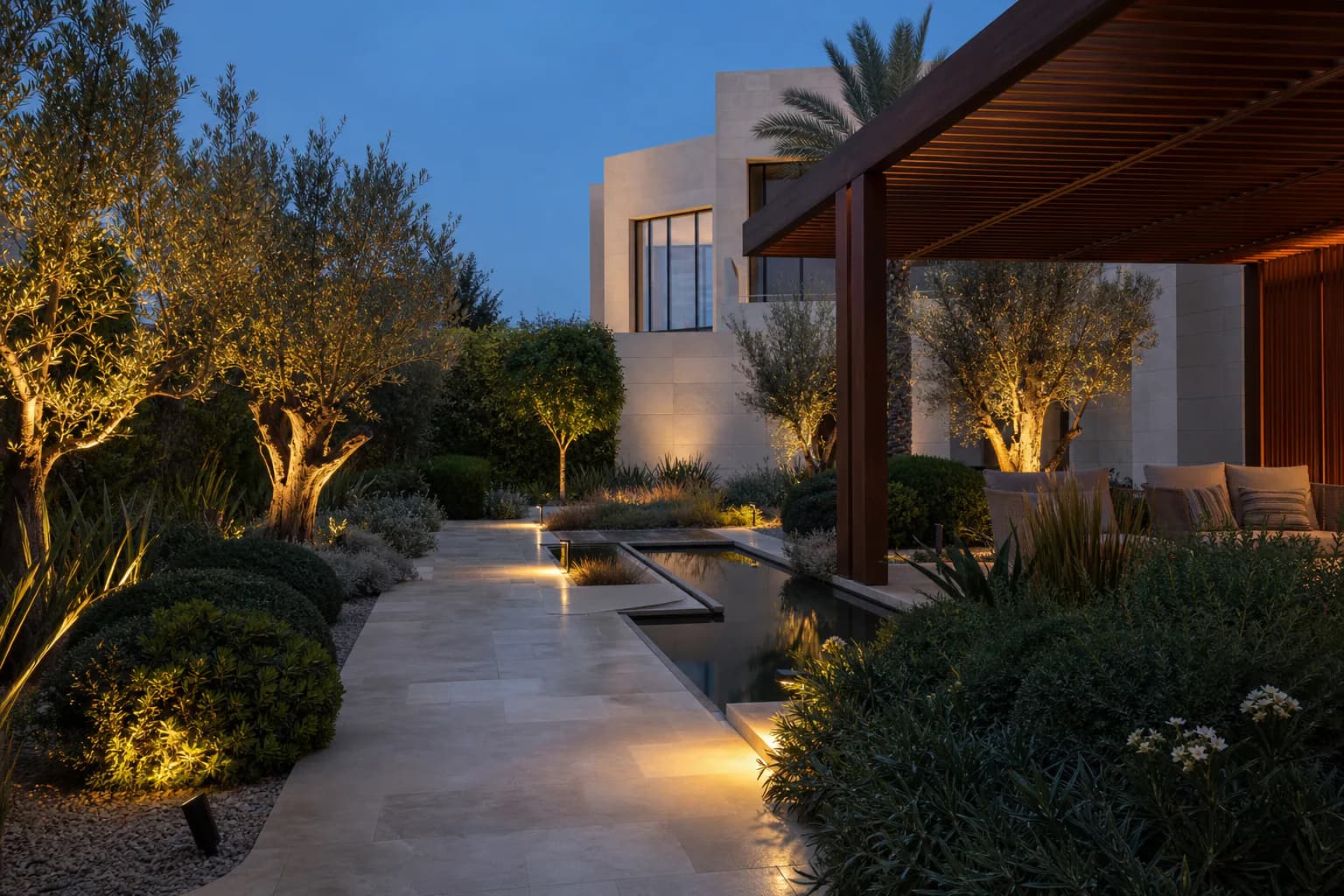
Night changes the landscape. Edges recede, foliage gains silhouette and small moments of light become more powerful. A considered lighting plan works with that change instead of trying to reproduce the garden as it appears by day.
Decide what the light must do
Movement comes first. Steps, level changes, entrances and main routes need enough clarity to support confident use. This functional layer can be quiet when fixtures are positioned as part of the landscape rather than added after construction.
Other light can establish atmosphere, reveal a destination or hold a view from inside. Naming the purpose of each point helps avoid repetition and gives the composition a clear hierarchy.
Use darkness as a material
Not every surface needs illumination. Darker intervals allow the eye to rest and make selected planting, texture or water feel more present. They also preserve the sense that the garden continues beyond the brightest area.
Contrast should remain comfortable. A bright source in the direct line of sight can overpower subtle layers around it. Shielding and careful aiming help the effect belong to the landscape.
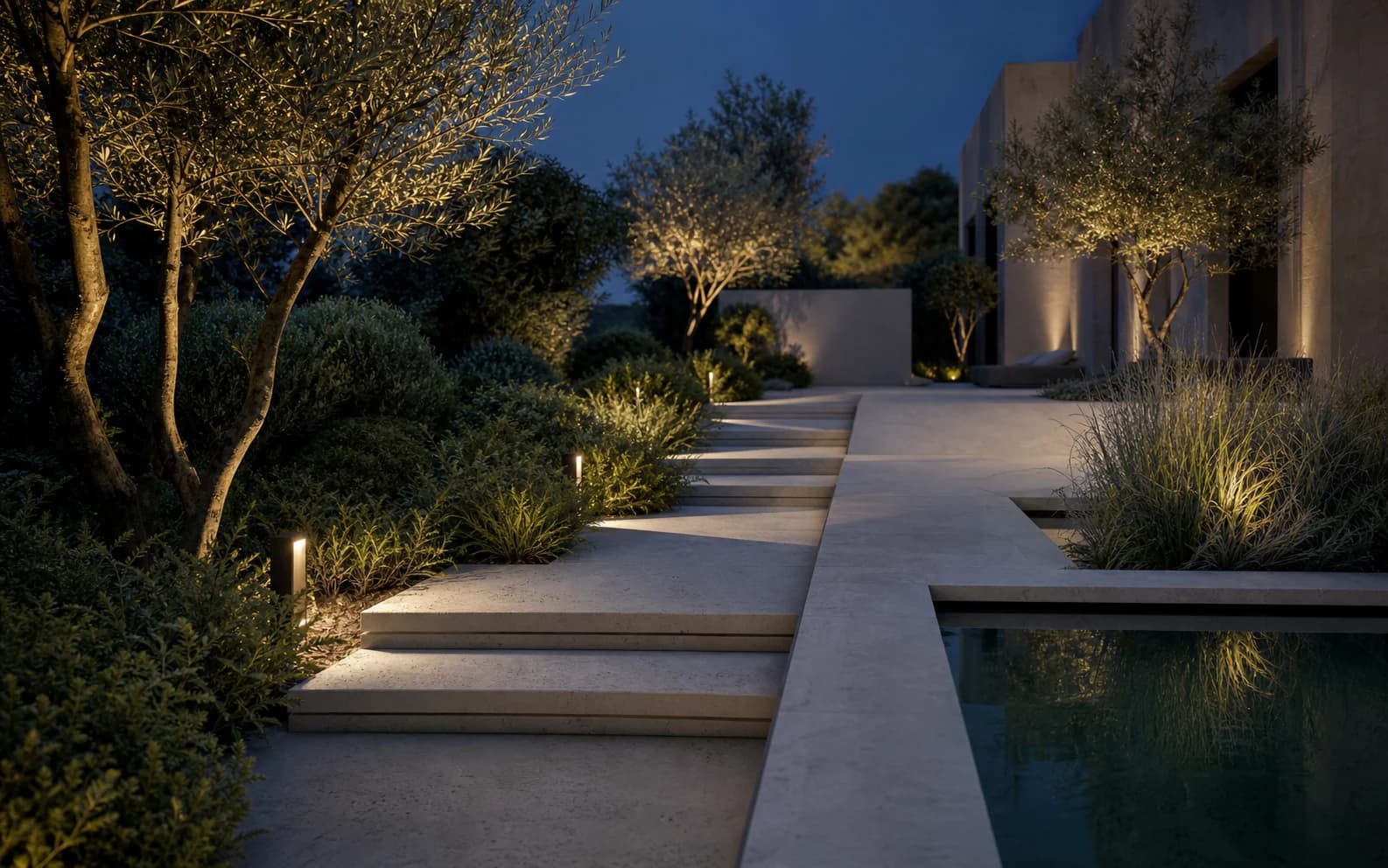
A garden at night needs hierarchy, not brightness everywhere.
Reveal form, not equipment
Light can graze the texture of a wall, lift the underside of a canopy or draw a soft line along a path. The most convincing effects often reveal form while allowing the source to remain discreet.
Plant growth must be anticipated. A fixture aimed through young foliage may be covered later, while maintenance activity can disturb exposed wiring or fittings. Placement should respect both the intended view and future care.
Build in control and renewal
Different uses call for different scenes. Arrival, dining and quiet evening use do not need every circuit active at once. Thoughtful control makes the lighting more adaptable and keeps unnecessary layers switched off.
Access for cleaning, adjustment and replacement should be part of the detail. A lighting scheme keeps its restraint only when fittings can be maintained and re-aimed as the landscape matures.
Use this on site
- 01
Light essential routes and level changes before adding accents.
- 02
Give every fixture a clear functional or atmospheric purpose.
- 03
Protect sightlines from glare and allow darker intervals to remain.
- 04
Plan controls and maintenance access for a landscape that will keep growing.
The next useful article

Designing for the UAE Climate Starts Before the First Line
How a careful site reading turns climate constraints into the foundations of a comfortable, durable UAE landscape.

A Garden Should Not Be Watered as One Room
A practical guide to irrigation zones that respond to plant needs, root areas and changing site conditions.

Shade Comes Before Planting
Why mapping shade early creates better garden rooms and gives planting a clearer role in the UAE climate.
Let your space begin again
Tell us about your space, and let us imagine what it can become.
Request a Quote