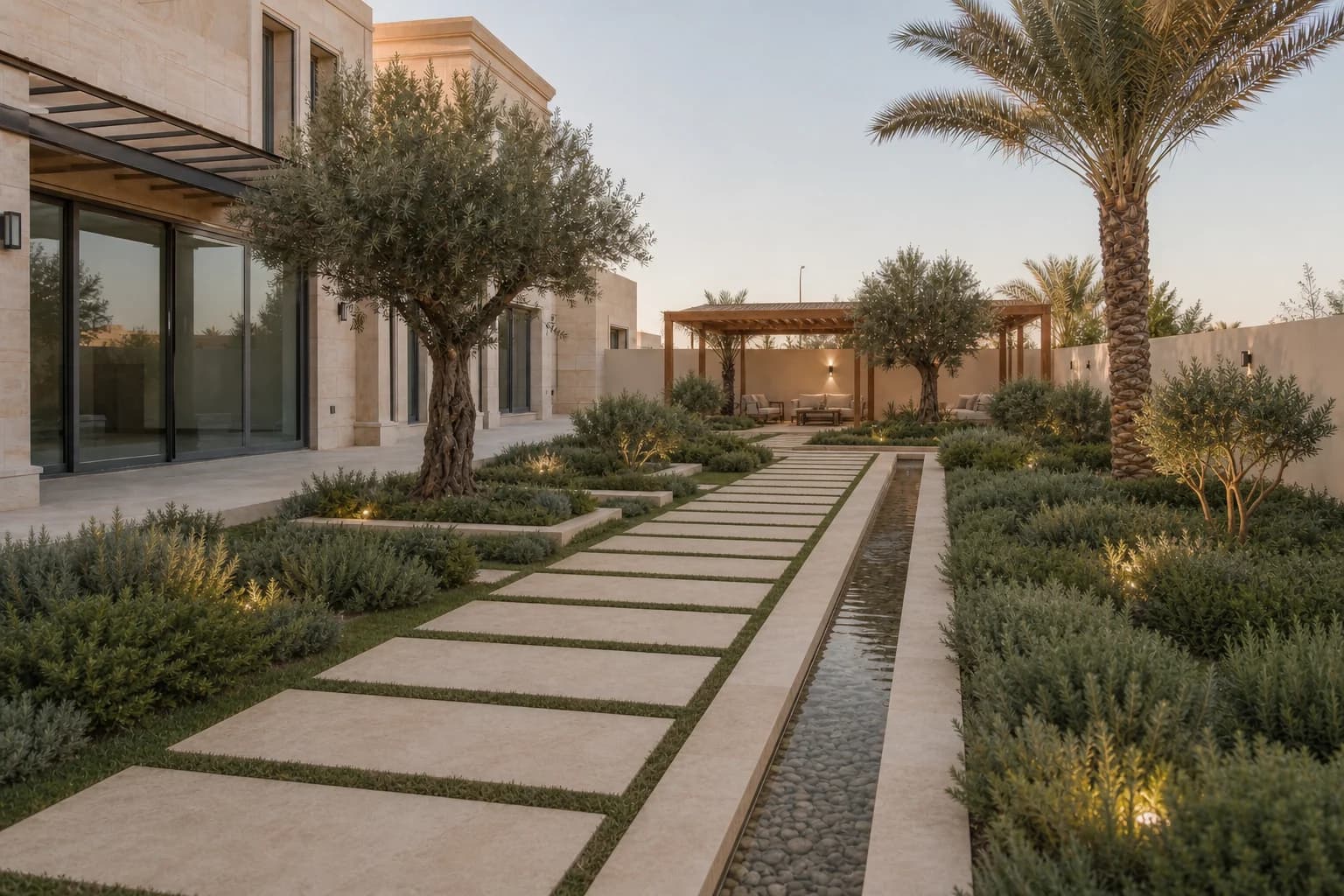
Shade Comes Before Planting
A comfortable outdoor space starts with the movement of the sun, then brings structures and living canopies together around daily use.
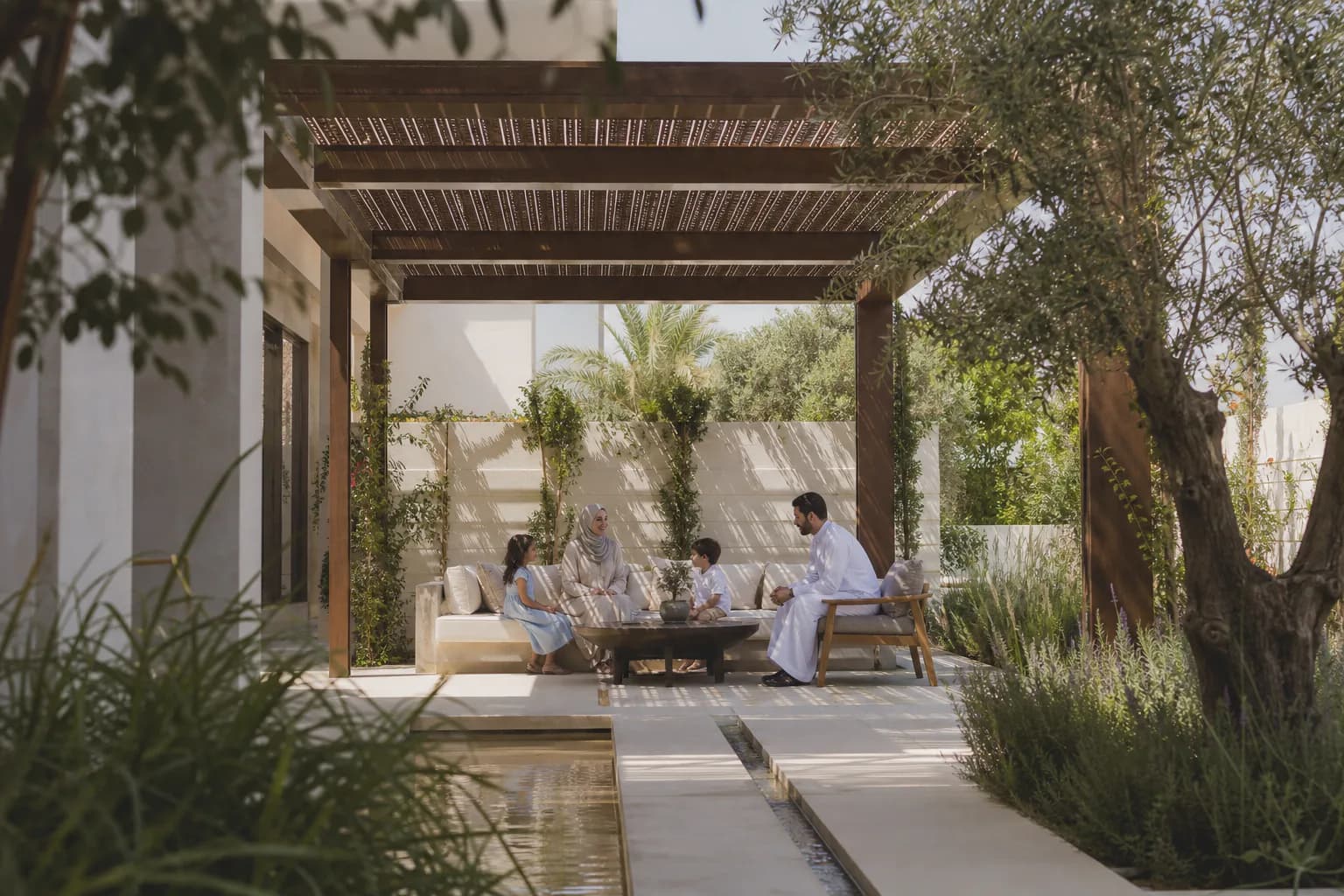
Planting can soften heat and create a sense of shelter, but it should not be asked to repair a plan that ignored shade. Establishing where comfort is needed, and when, gives the entire landscape a stronger structure.
Map the sun before placing objects
A garden is not exposed in the same way all day. The useful question is not only where sunlight falls, but when each space is likely to be occupied. Morning arrival, afternoon play and evening gathering create different priorities.
This map can guide the orientation of seating, paths and transitions. It also reveals where a shaded route may matter as much as a shaded destination.
Combine built and living shade
Pergolas and other structures provide an immediate framework. Trees and layered planting add changing light, texture and a softer edge as they grow. Used together, they can create depth without making one element carry the whole task.
The relationship should remain practical. Tree growth, root space, structural clearances and maintenance access need room. A beautiful overlap only works when each layer can develop safely.
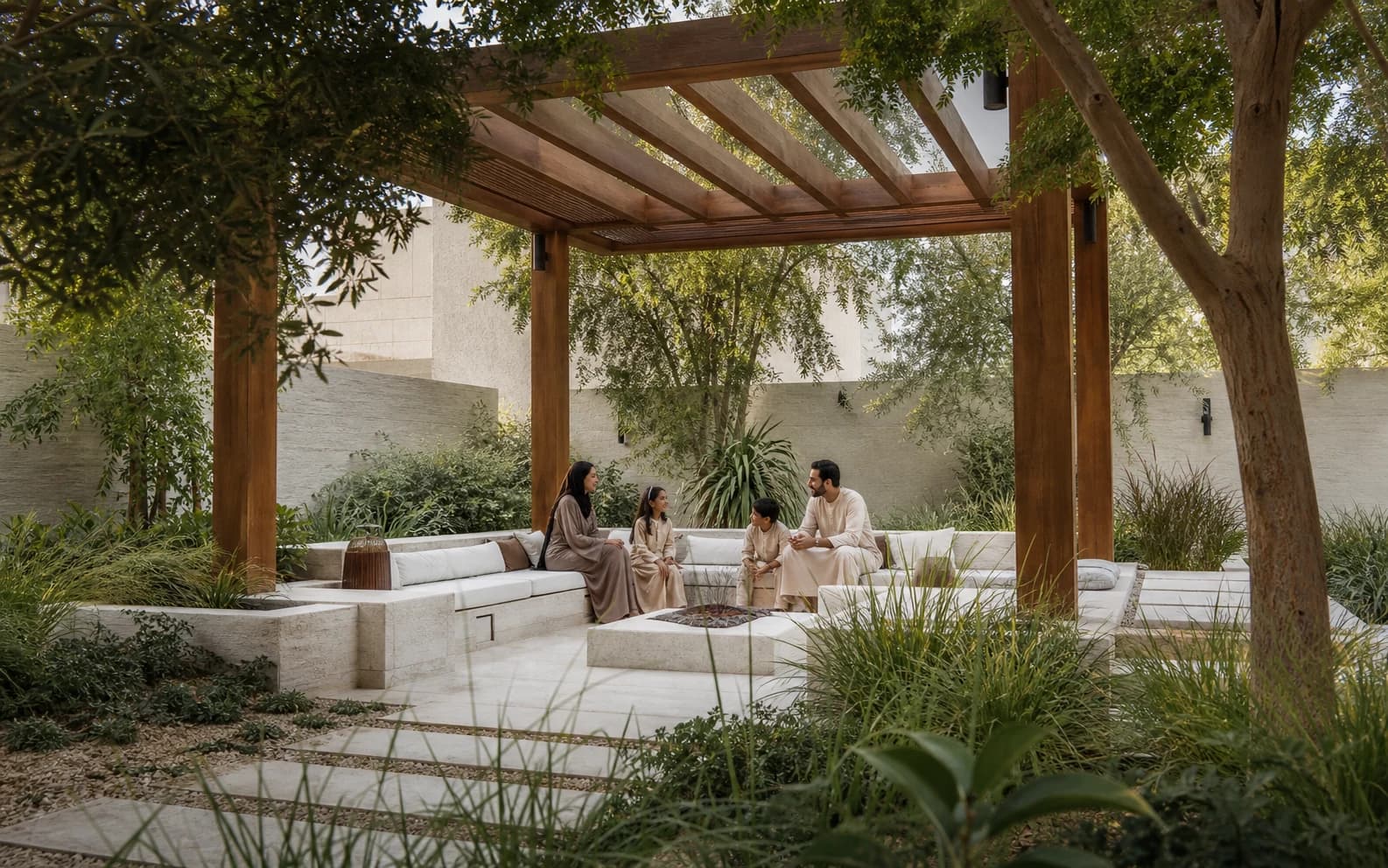
Do not ask planting to rescue comfort. Give it a comfortable structure to inhabit.
Give shade a purpose
Shade becomes valuable when it supports something people want to do. A dining area needs different clearances from a quiet seat. A family gathering space needs connection to the house, while a garden pause may benefit from a more secluded position.
Furniture, lighting, circulation and views should be considered with the shade strategy. This turns the canopy into part of a complete outdoor room rather than a feature standing alone.
Let planting complete the atmosphere
Once the main comfort strategy is clear, planting can refine it. Foliage filters views, softens structures and brings variation to the light. Climate-appropriate choices also help the garden remain balanced in the long term.
The result should not depend on dense planting everywhere. Selective layers can frame a view, cool the character of a space and preserve openness while keeping care requirements considered.
Use this on site
- 01
Map when each outdoor area receives sun and when people will use it.
- 02
Plan shaded routes as carefully as shaded destinations.
- 03
Combine immediate structural shade with canopies that mature over time.
- 04
Coordinate seating, lighting, views and maintenance around the shade plan.
The next useful article
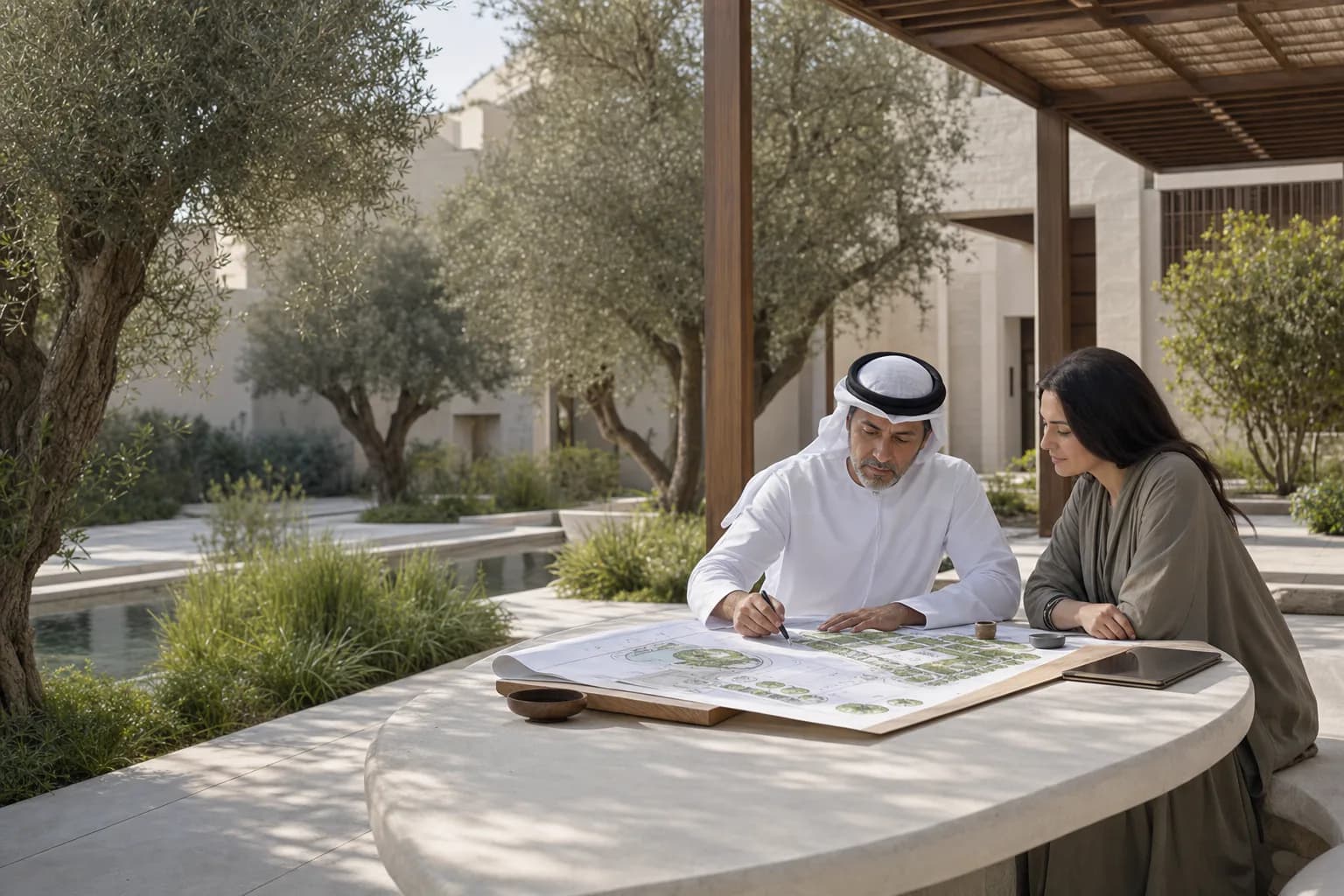
Designing for the UAE Climate Starts Before the First Line
How a careful site reading turns climate constraints into the foundations of a comfortable, durable UAE landscape.
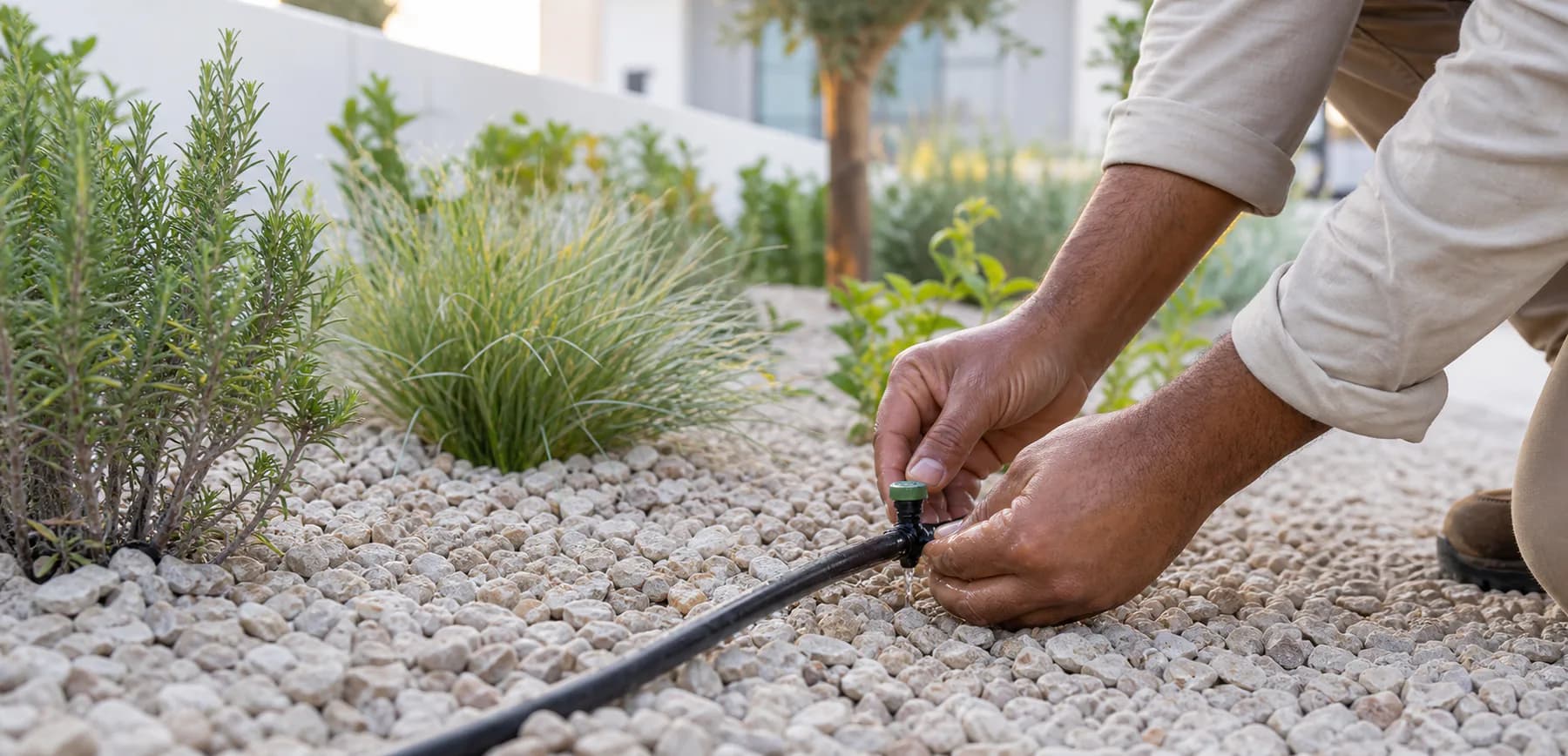
A Garden Should Not Be Watered as One Room
A practical guide to irrigation zones that respond to plant needs, root areas and changing site conditions.
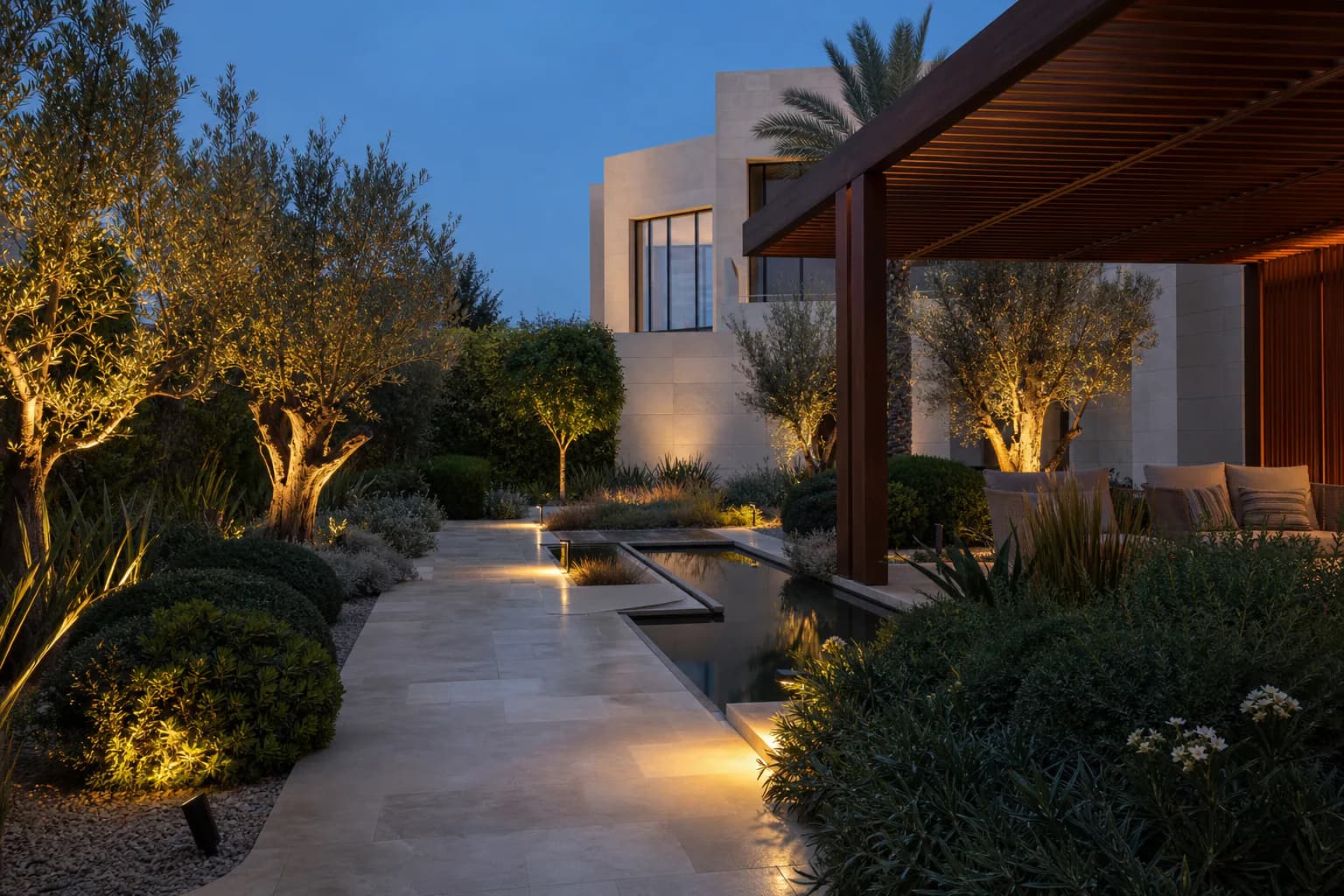
Let the Garden Keep Some Mystery
A restrained approach to garden lighting that balances safety, atmosphere, planting and ongoing care.
Let your space begin again
Tell us about your space, and let us imagine what it can become.
Request a Quote